TryHackMe CompTIA PenTest+ Pathway — Full Review

Introduction
The CompTIA PenTest+ pathway helps learners build practical skills for penetration testing and vulnerability assessment. While I lack direct experience with the PenTest+ exam itself, this pathway offers hands-on labs and exposure to key tools, techniques, and post-exploitation tactics relevant for offensive security.
Section 1: Planning and Scoping
Focuses on the foundations of penetration testing, project planning, scoping engagements, and understanding governance and regulations. Valuable insights into setting clear objectives, identifying client needs, and aligning with legal frameworks.
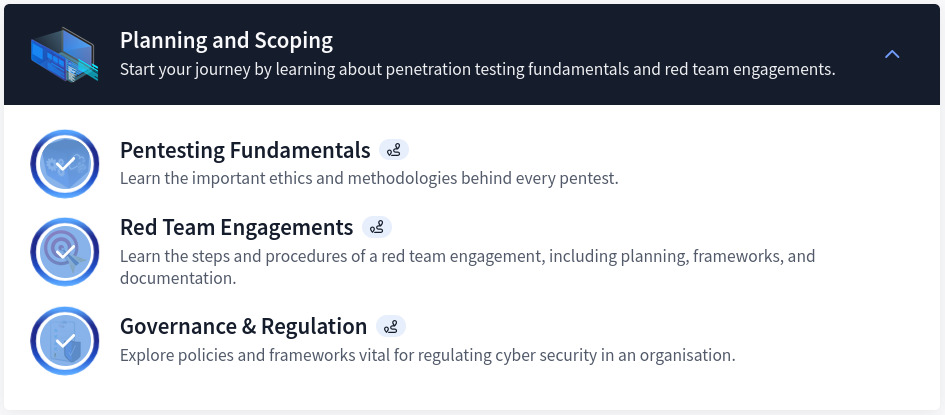
Disclaimer: It is crucial to understand everything and have full permission before engaging in any form of assessment.
Section 2: Tools and Code Analysis
Introduces key tools such as Metasploit, Wireshark, Burp Suite, and Hydra. Also integrates Python programming basics and its application in PenTesting.
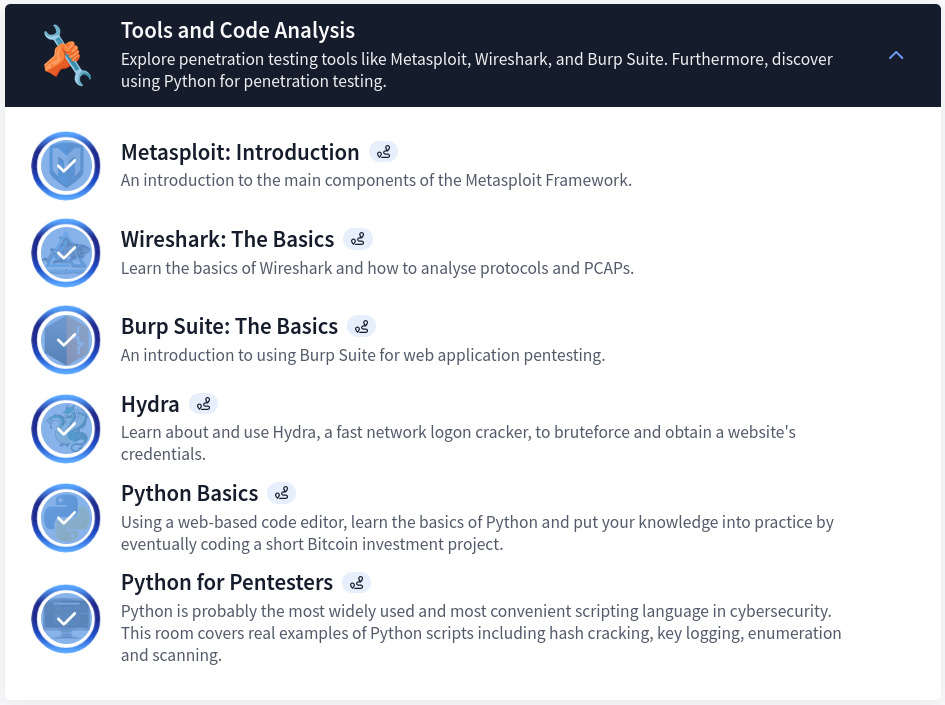
Note: It’s important to fully grasp the basics of each tool to use it for high-level assessments.
Section 3: Information Gathering and Vulnerability Scanning
Covers passive and active reconnaissance, host discovery, and advanced scanning methods using Nmap to uncover potential weaknesses.
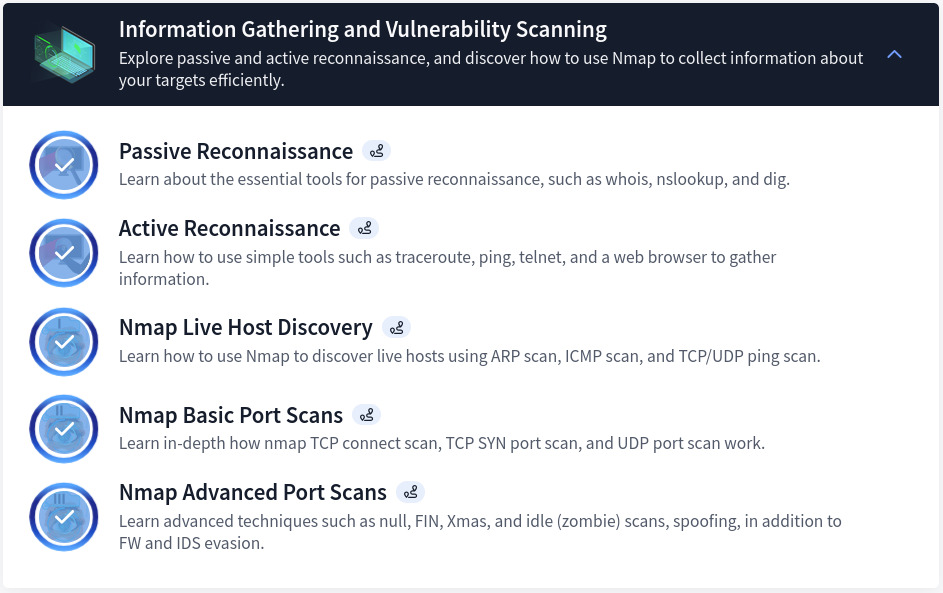
Note: You can use different tools for the same purpose, Rustscan and Naabu are great alternatives.
Section 4: Attacks and Exploits
Real-world attack scenarios simulated on both Windows and Linux, including Active Directory exploitation. Time consuming but yet rewarding.
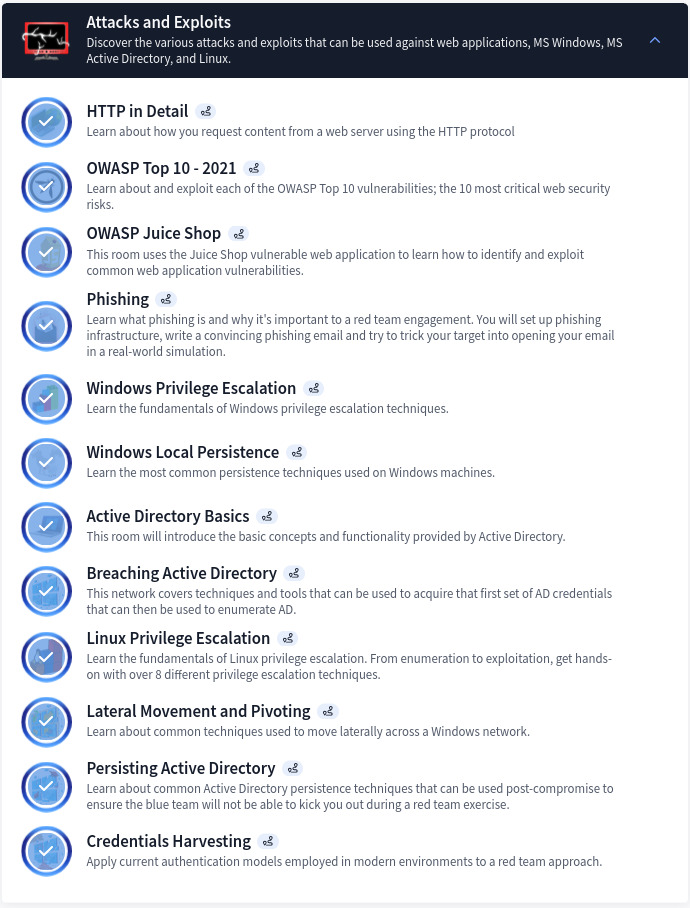
Note: The same modules are also covered in the Offensive PenTesting and Red Teaming pathways.
Core Deliverables

- Planning and Scoping: Define PenTesting goals, scopes, and legal compliance (GDPR, HIPAA).
- Tools and Code Analysis: Working knowledge of Metasploit, Wireshark, Burp Suite, Hydra, and Python scripting.
- Information Gathering: Mastery of Nmap, passive and active recon, and misconfiguration identification.
- Attacks and Exploits: Web vulnerability exploitation, privilege escalation, AD attacks, lateral movement, and credential harvesting.
Conclusion
As an eJPT-certified individual, I learned new things from this path mostly Active Directory enumeration and attacks. A good addition for those aspiring to excel in vulnerability assessments and offensive security roles. The Offensive PenTesting and Red Teaming pathways cover more techniques for anyone interested in going further.